
Discover the Ommerschans
Not far from here lies an area with a long and remarkable history—The Ommerschans. Several noteworthy events occurred here on the historic route from Ommen via Zuidwolde to the North.
Brave soldiers stood along this route four hundred years ago, ready to stop the Spaniards. Two hundred years later, The Ommerschans received vagrants and beggars as part of a social experiment in what became known as the Colonies of Benevolence. An intriguing history unfolds here! Early in the 20th century, a new version of the social experiment continued at Veldzicht.
The Ommerschans is at the centre of a man-made nature reservation. Travel with us through time at The Ommerschans! We love telling you all about this unique historic area.

9000 BC to 1568 - From primaeval landscape to a military fortress
After 11,000 years, the area slowly became more populated, and mining commenced. The area looked very different from today, well into the Middle Ages. Northeastern Netherlands was a swamp of peatlands—a big wet sponge. Few people lived there, and farming was almost impossible. But the area was slowly reclaimed and became more populated. Some areas would dry up in summer, allowing people to cross to the North. The Ommerschans was located near these routes, so it makes sense that the area became of military and economic strategic importance.
The first people - 9000 BC.
After the last ice age, peat domes and swamps formed along the river Vecht. The first people in the area settled on small high patches of sandy soil. At that time, the area was still very sparsely populated.
Sword of The Ommerschans - 1500 – 1350 BC.
A ceremonial sword from the Bronze Age was found in the moor just south of . It is among the rarest finds from Prehistoric Europe. The sword can be viewed at the National Museum of Antiquities in Leiden.
Stratec location - After 1500
After 1500, the road through the swamp was increasingly used for transport, and its economic and strategic function continued to grow. The northern provinces felt threatened during the war with the Spanish, so it was important to secure the passages through the swamp, including those North of Ommen.
1568 to 1818 - The defensive sconce
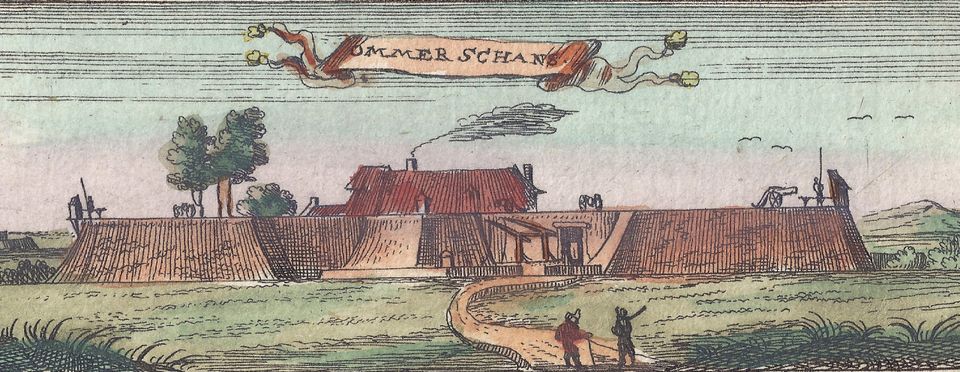
The Eighty Years’ War began in 1568, with the Netherlands under William of Orange rebelling against the Spanish Empire under King Philip II. The war resulted in the establishment of the Republic of the Seven United Netherlands, also known as the Dutch Republic. During the war, Overijssel’s countryside was hit hard by looting Spaniards. A defensive sconce was built along the Ommen-Zuidwolde route to protect the North. After the Peace of Münster in 1648, the sconce gradually lost importance. The sconce was used and maintained on and off throughout the two hundred years of its existence. The land was given on loan to the Society of Benevolence in 1819.
Construction of the Schans - 1623
In 1623, the States General of the Netherlands ordered the construction of a sconce to defend the northern provinces. The so-called deed of non-prejudice granted to Overijssel for this purpose is in the custody of Collection Overijssel in Zwolle. The sconce initially consisted only of a square with three points (bastions) on the Ommen side and a rampart in front of it. The sconce defended the northern regions against a Spanish invasion. Around 1670, the sconce was further fortified.
The Disaster Year and Bom Berend - 1672
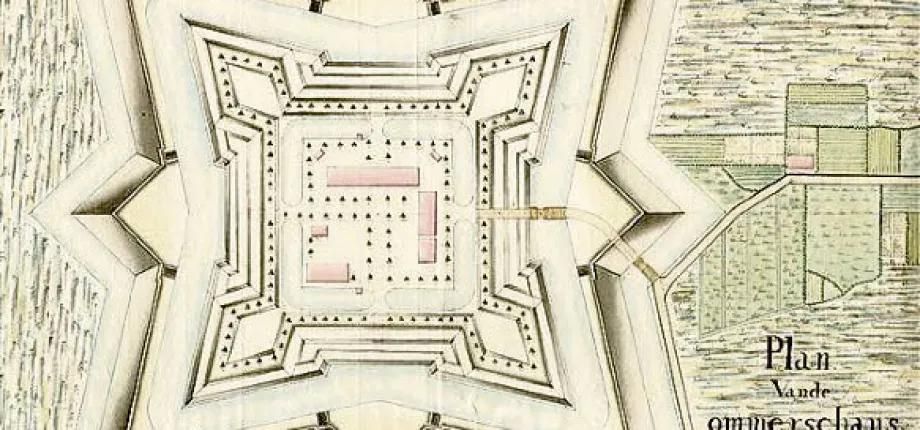
In 1672, the Dutch Republic was threatened from all sides; we call this the ‘Rampjaar’ (Disaster Year). The Ommenschans was occupied only once that year by the troops of the bishop of Münster, ‘Bommen Berend’. It happened without a struggle as the 146 musketeers and 55 spearmen at The Ommerschans fled as soon as the enemy approached. Around 1740, The Ommerschans was fortified and made suitable for a large arms and ammunition depot. The sconce was extended with ravelins and eventually was given a star shape.
Patriots raid the sconce - 1787
At the end of the 18th century, the Republic of the Seven United Netherlands was unsettled. Economically things were going badly, and civilian militias (the Patriots) were formed in the cities out of discontent. The people wanted more say. The conflict escalated in 1787 when fighting broke out. Patriots from Zwolle and Vollenhove raided The Ommerschans, taking all arms and ammunition.
1818 bis 1892 - A penal and beggars’ colony
Colonies were established to develop Drenthe and Overijssel and allow the unemployed and beggars to build a new life. Voluntary contributions from thousands of Dutch people funded this private enterprise. Free colonies were established in Frederiksoord, Wilhelminaoord, Willemsoord and Wortel (Belgium), where people could farm independently and build a new livelihood. Unfree colonies, including The Ommerschans, were established for those who did not obey the rules and for beggars. Veenhuizen and Merksplas (Belgium) were also added at a later date. The Ommerschans eventually became the first penal colony belonging to the Society of Humanitarianism.
Johannes van den Bosch (1780-1844)
In 1818, the socially-minded Johannes van den Bosch proposed an ambitious plan to fight poverty in the Netherlands by founding agricultural colonies. This marked a turning point in the Dutch government’s thinking and actions. Poverty alleviation shifted away from the churches and became more of a government task.
The beggar’s institution - 1820
A two-storey main building (100 x 100 meters) with a large courtyard was constructed at the heart of the sconce. 1200-1500 beggars were housed in 30 halls of 40 people. The courtyard was divided in two by a fence; men and women lived separately, working on one of the 21 colony farms in the area. Some were to work at the Spinning or Weaving workshops.
Children at The Ommerschans
Children also lived or were born at The Ommerschans. They stayed with their mother until the age of eight. There was a small school on the premises for free education. Classes were held in the evenings, as children over eight had to earn money during the day.
Government takeover of the Colonies - 1859
Government takeover of the Colonies
Agriculture
Extensive experimentation in agriculture took place. Agricultural innovation is imperative to boost agricultural production in areas with poor soil. It was a model for many other experiments in Europe. At The Ommerschans, this was the most profitable, with 35 hectares per farmstead. The rectangular plot and avenue structure are still visible in the landscape today.
1892 to present - Justice takes over
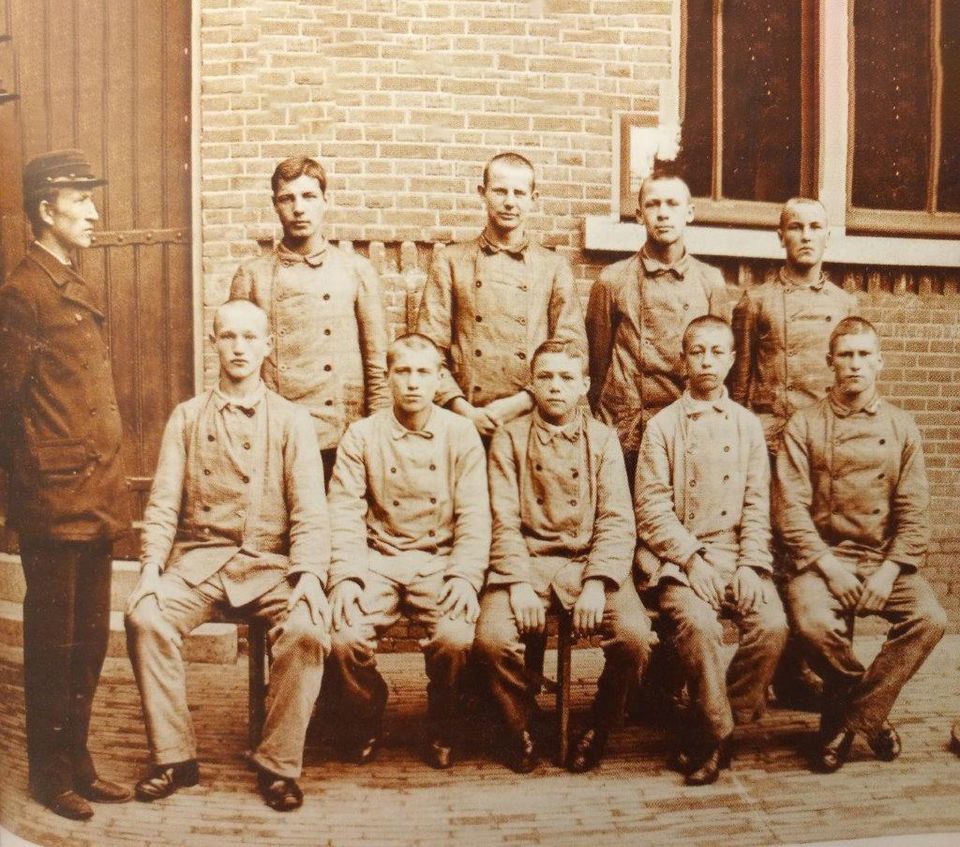
A place where derailed young people are educated and trained for mainly agricultural work.
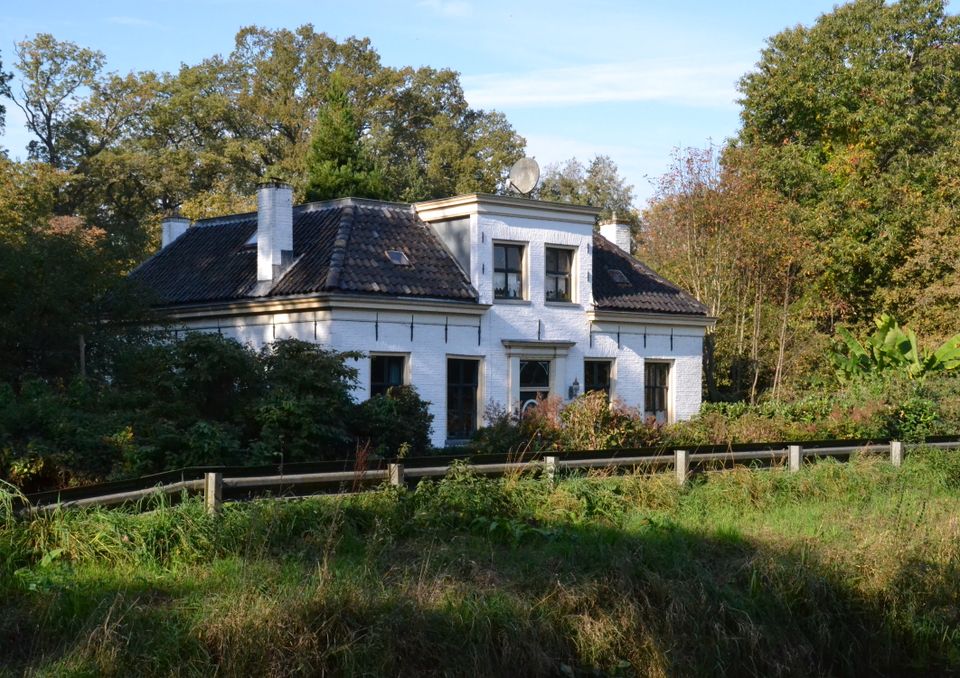
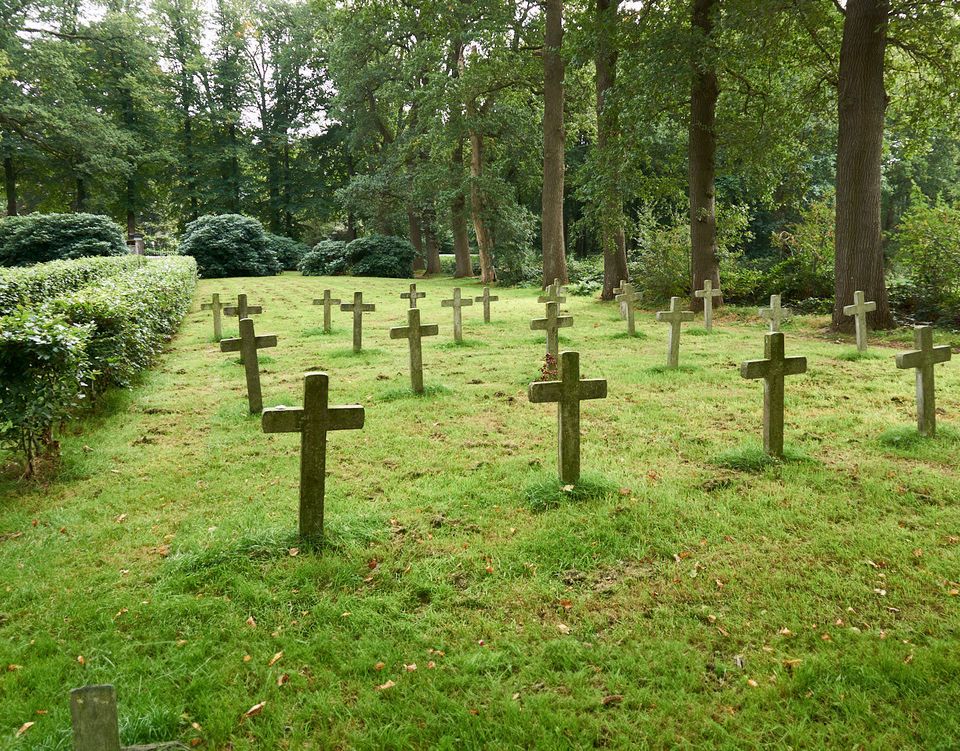
After the colony closed, the Department of Justice took over. In 1894, a state reformatory was established, the ‘Rijksopvoedingsgesticht voor Jongeren’ (ROG). A new main building called Veldzicht was constructed. In 1932, the state reformatory was turned into a state asylum for psychopaths, a more prison-like environment for more serious criminals and a forerunner of today’s TBS clinics. Veldzicht currently operates as a centre for transcultural psychiatry. In the 1990s, the Department of Justice began to divest more and more land and buildings from The Ommerschans. After the turn of the century, much of the territory was transferred to the Forestry Commission, which turned it into a nature reserve and cultural area. In 2001, the initiative to raise the profile of The Ommerschans arose, resulting in the establishment of The Ommerschans Association.
State Education Institution - 1894
The boys who lived at Veldzicht studied agriculture and horticulture. In 1905, more craft training courses were added for the boys to learn skills for later in life.
Historical importance
It is important to tell the history of The Ommerschans. The Ommerschans reminds us of times when safety and a full stomach were not guaranteed, and we are still looking for solutions to the same problem today, which is what The Ommerschans Association works toward because it is such a unique part of the Netherlands.
Veldzicht
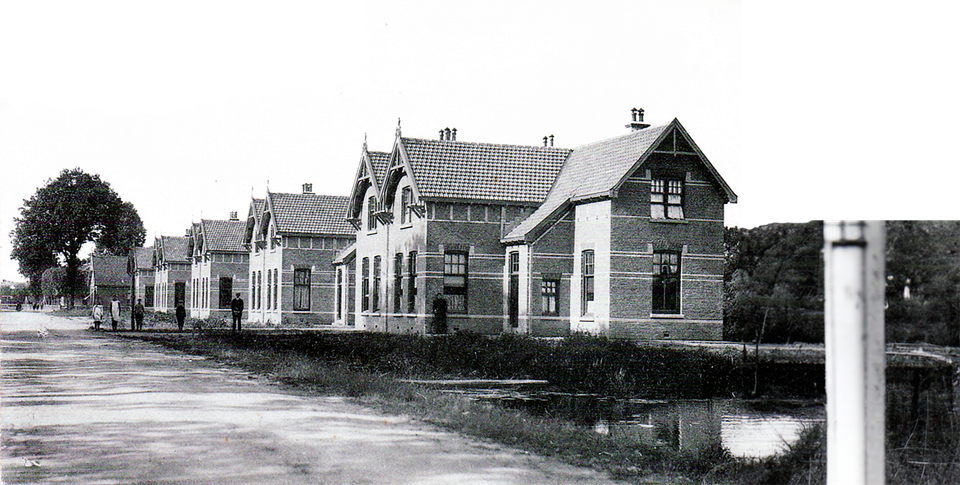
The people who work for Veldzicht live in Balkbrug. Dozens of service houses were built especially for them from 1911 onwards. It became a civil service village. Officials are a powerful driver of the village’s thriving middle class and growth.
The houses along Ommerweg and Boslaan in Balkbrug were built by chief engineer and architect W.C. Metzelaar, who also designed the Veldzicht building.
And now... The present!
The Green and Silent Colony
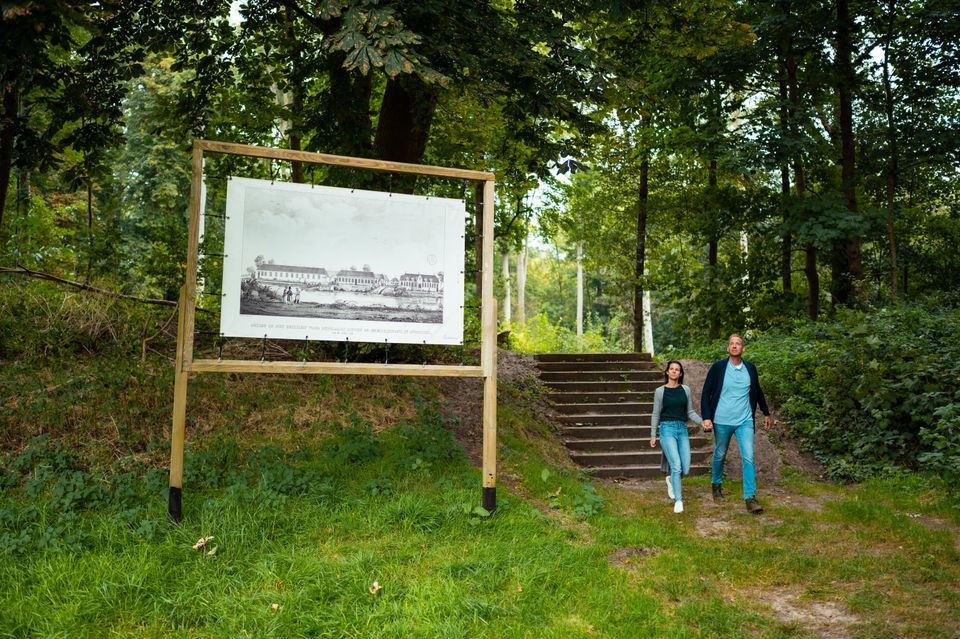
The Ommerschans is surrounded by a beautiful green landscape, where you can take lovely walks and enjoy the tranquillity. It is with good reason that it is known as the silent Colony. A route with information boards provides insight into interesting events from the past. Part of the route is a unique work of art consisting of stepping stones that allow you to reach the other side of the canal with dry feet. The owner of The Ommerschans, the Forestry Commission, has deliberately allowed the area to rewild in recent years, which has many ecological benefits. In particular, the tranquillity and lush flora provide shelter and food in the predominantly open landscape. Various animals have been observed, including deer, songbirds, woodpeckers, owls, bats and tree frogs. The most common tree species in the area are oak, ash, beech and poplar. The area has an abundance of wildflowers, including rewilded flowers such as yellow anemones, wild garlic, woodland crocuses and wood millet. The Ommerschans is a beautiful area to enjoy nature, history and tranquillity.
European Heritage Label
The European Union has awarded the Colony of Benevolence De Ommerschans the European Heritage Label in recognition and appreciation of its contribution to European values and standards. The Colonies of Benevolence were a forerunner of what we would now call a social enterprise. In times of great economic crisis, they experimented with a new approach. Through public-private partnerships, investments were made in agricultural innovation; the unemployed and homeless poor were given a roof over their heads and access to education, employment and medical care. The areas long functioned as agricultural colonies and even today symbolise Europe’s ongoing fight against poverty, unemployment and homelessness.